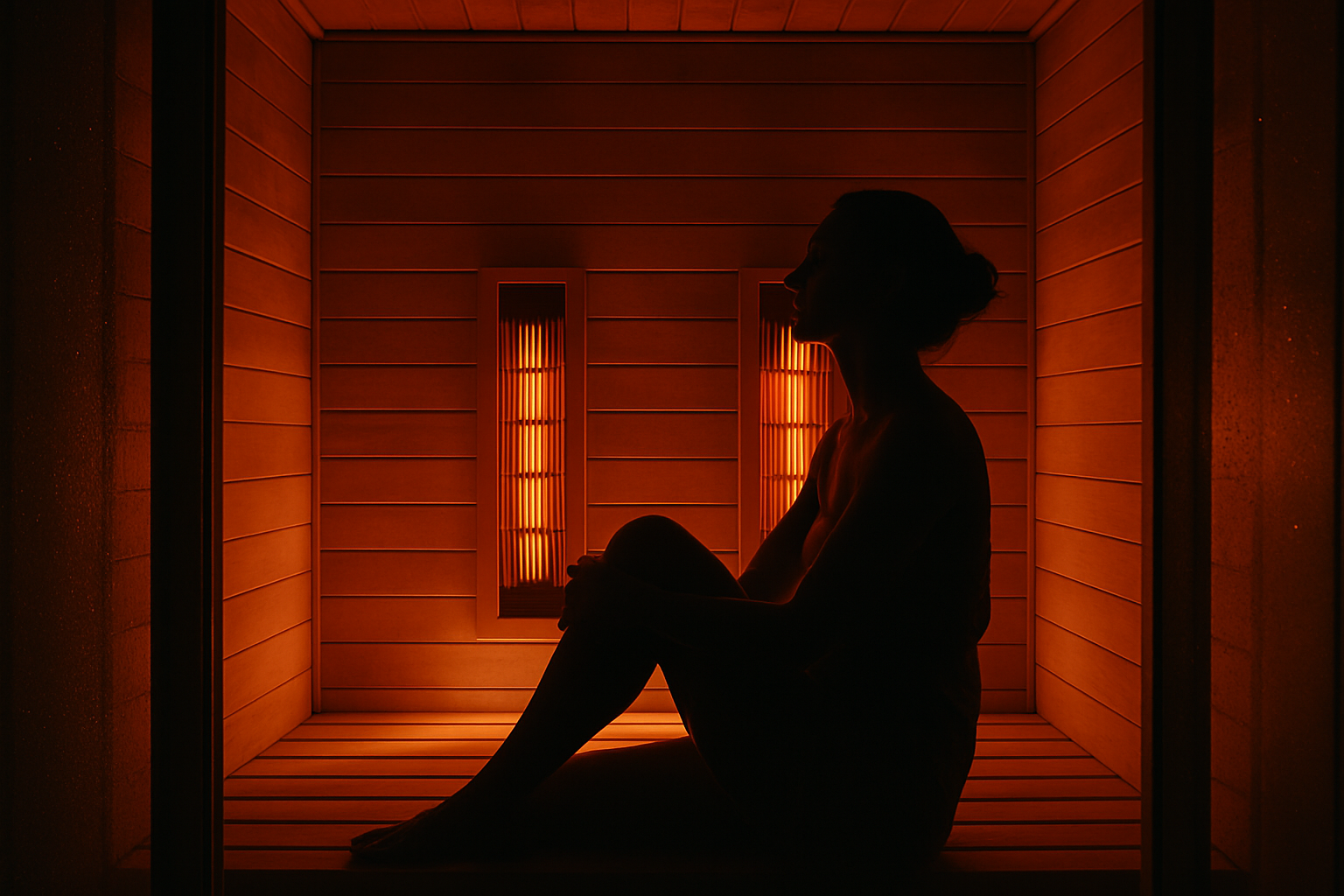
I first tried an infrared sauna when I was deep in my Lyme recovery. My naturopath suggested it, and honestly, I thought it sounded a bit woo. Sit in a warm box and sweat? That's the treatment?
But within a few sessions, I noticed something. The brain fog lifted a little. My joints ached less. I slept better that night than I had in months. So I kept going.
That was years ago now, and infrared sauna therapy became one of the tools I offered clients at my clinic. I've watched hundreds of people have their own version of that same moment where they realise this isn't just relaxing, it's actually doing something.
How infrared saunas are different from regular saunas
A traditional sauna heats the air around you to pretty extreme temperatures. You sit there sweating because the room is hot. An infrared sauna works differently. It uses infrared light waves to warm your body directly, which means the air temperature stays much more comfortable, usually around 45 to 60 degrees, while the heat penetrates deeper into your tissues.
The infrared wavelengths reach up to 4cm into the body. That means they're getting into your muscles, your joints, even your organs. You're not just sweating from the surface. Your body is detoxifying at a cellular level.
The sauna I used with clients was full-spectrum, meaning it combined near, mid, and far infrared wavelengths. Each one does something slightly different, from skin rejuvenation to deep tissue detox.
What the research actually shows
I'm not going to overstate this. Infrared sauna therapy isn't a miracle cure. But the evidence for certain benefits is genuinely solid.
Detoxification is the big one. The deep heat helps release toxins stored in fat cells. We're talking heavy metals, environmental chemicals, the stuff your body struggles to shift on its own. The sweating from infrared is different to exercise sweat. Studies have found it contains a higher concentration of heavy metals and toxins.
Pain relief is another area where I've seen real results. Clients with chronic muscle soreness, joint pain, even arthritis reported significant improvement with regular sessions. The heat increases blood flow, which delivers oxygen and nutrients to damaged tissue while reducing inflammation.
Circulation improvement happens naturally as the infrared waves dilate blood vessels. Better circulation means better cardiovascular function, more efficient nutrient delivery, and faster recovery from exercise or injury.
Stress reduction might sound obvious, sitting in a warm, quiet space is inherently calming. But it goes deeper than that. The heat actually lowers cortisol levels and triggers the release of endorphins. Several of my clients told me their sauna sessions were the only time their nervous system truly switched off.
The benefits I saw most often in my clinic
Beyond the well-researched areas, here's what clients consistently reported:
Weight management support through increased calorie burn. You can burn 200 to 600 calories in a single session, depending on duration and temperature. It's not a replacement for exercise, but it's a genuine metabolic boost.
Better sleep was probably the most common feedback. Something about the deep warming and subsequent cool-down seems to reset the body's sleep cycle. Clients who'd struggled with insomnia for years started sleeping through the night.
Skin improvements surprised a lot of people. The sweating purifies pores, and the increased circulation promotes collagen production. I had clients whose skin looked visibly different after a month of regular sessions.
Immune system support showed up too. Regular users seemed to get sick less often, and when they did, they recovered faster.
Getting the most from infrared sauna
If you're trying infrared sauna for the first time, start with shorter sessions of 15 to 20 minutes and work up to 30 or 45 minutes as your body adjusts. Hydration is non-negotiable. Drink at least 500ml of water before you go in, and keep drinking throughout the day afterwards.
After your session, don't rush. Cool down gradually. A cool shower helps close your pores and feels incredible after that deep warmth.
Most people notice benefits within the first few sessions, but the real changes come with consistency. Weekly sessions over a couple of months is where the magic happens.
Why I still recommend it
Even though I'm no longer offering sauna sessions at the clinic, I still recommend infrared sauna therapy to almost every client I work with. It's one of those rare wellness tools that's genuinely backed by evidence, feels amazing, and works on multiple body systems at once.
If you're dealing with chronic pain, sluggish energy, poor sleep, or you just want to support your body's natural ability to heal and detoxify, it's worth trying. Find a clinic near you that offers full-spectrum infrared, and give yourself at least four sessions before you decide if it's for you.
Your body will probably tell you before that.